From September 4 to 5, the North‑China and Northeast Regional Trials of the 2nd International Digital Application Competition of “Chinese + Vocational Skills”, under the 2026 Belt and Road & BRICS Skills Development and Technological Innovation Competition, were successfully held at Beijing Polytechnic University. Nearly 300 contestants from North and Northeast China took part in the trials, covering five groups: secondary vocational students, higher vocational college students, undergraduates, teachers and international participants. The event fully demonstrated the latest achievements in the international digital application of the “Chinese + Vocational Skills” initiative.
Bai Li, Deputy Director of the Domestic Competition Office for the BRICS Skills Development and Technological Innovation Competition, Li Huajie, Chief Representative in China of the World Skills Development Alliance, Wang Wei, Deputy Party Secretary and President of the University, Zhu Yunli, Member of the University Party Committee Standing Committee and Vice‑President, and Chen Jiangfeng, Member of the University Party Committee Standing Committee and Vice‑President, attended the opening and closing ceremonies. Heads of relevant functional departments and secondary schools of the university also participated in the event.
Delivering a speech at the opening ceremony, Wang Wei extended a warm welcome to guests and expressed gratitude to the event organizers. He noted that this competition serves as a vivid practice for implementing the requirement to “promote the ‘Chinese + Vocational Skills’ programme to support international production‑capacity cooperation and Chinese enterprises’ global outreach”, as well as a key measure to advance Chinese vocational education standards worldwide. As Beijing’s first and so far the only municipal‑run vocational undergraduate university, the institution pledged to deliver full logistical support for the competition and wished all contestants outstanding results.
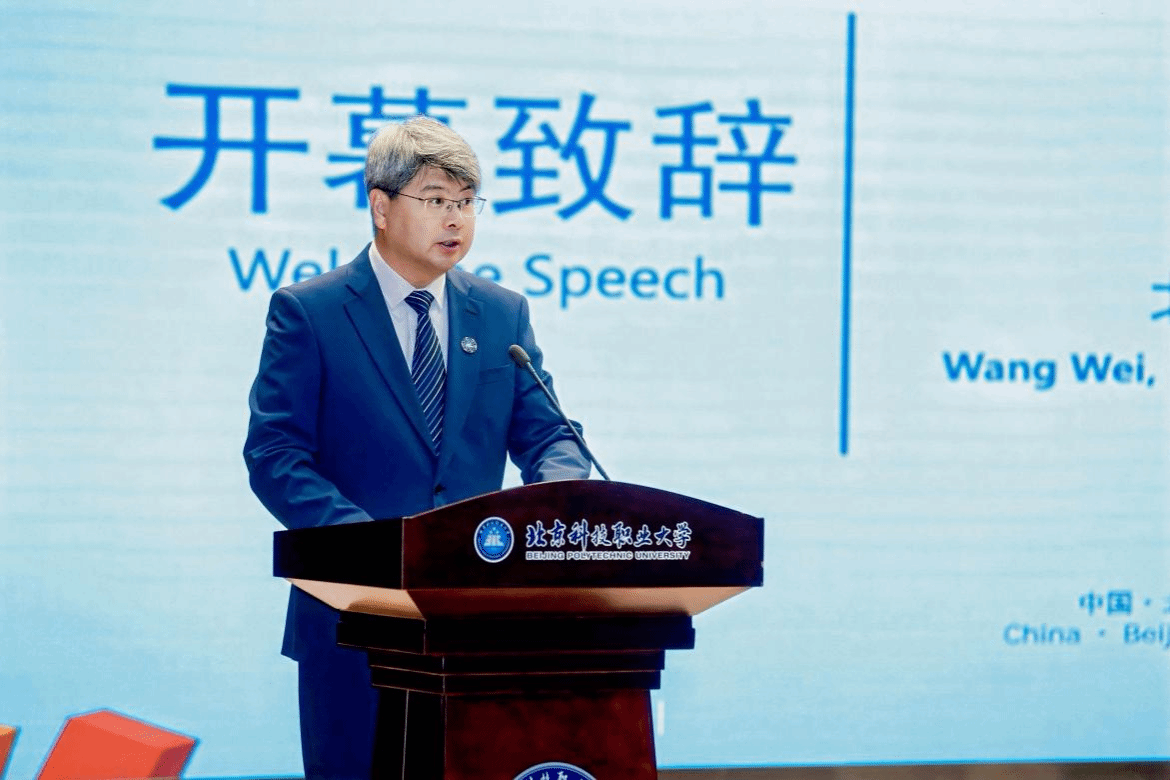
Bai Li and Li Huajie also addressed the opening ceremony respectively. Bai Li remarked that the competition constitutes a vital platform for international exchanges in vocational education and has evolved into a distinctive brand empowering the international development of vocational skills through Chinese‑language proficiency. She encouraged contestants to forge friendships through competition and demonstrate their overall competence. Li Huajie stressed that the competition undertakes the mission of globalizing Chinese vocational education, fosters in‑depth integration of language proficiency and vocational skills, and cultivates interdisciplinary talents. He urged participants to compete to their fullest potential and showcase the vigour of young talents in China’s vocational education sector. Both wished the competition a complete success.
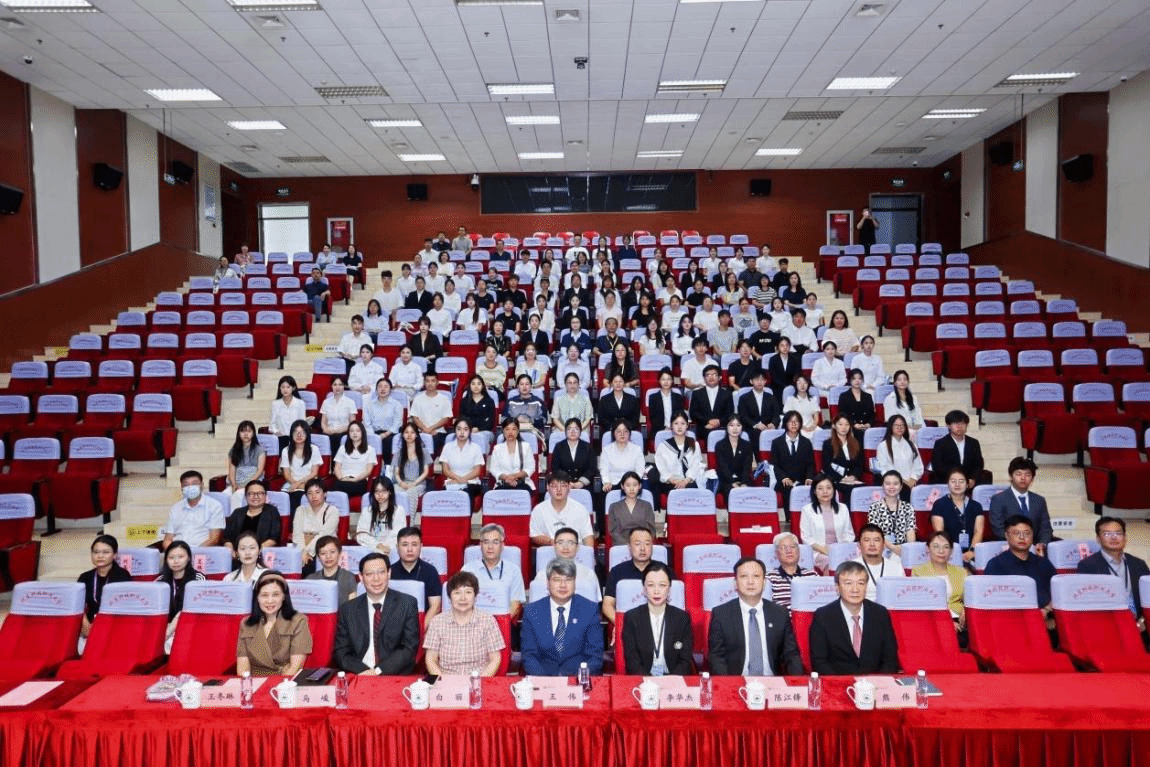
Zhu Yunli gave the closing‑ceremony speech. He thanked the organizers, supporting enterprises, expert judges, contestants, staff members and volunteers. He hoped contestants would apply insights gained from the competition to their classrooms and careers, continuously improve Chinese‑language proficiency, sharpen vocational expertise, leverage digital tools, and grow into high‑quality interdisciplinary talents “proficient in Chinese, competent in professional skills and versed in cross‑cultural communication”, so as to contribute wisdom and strength to Chinese enterprises’ global expansion and the advancement of the Belt and Road Initiative.
Centred on the core philosophy of “Chinese Empowers Professions, Digital Connects the Future”, the competition adopted a three‑in‑one assessment model integrating “language proficiency, vocational skills and digital tools”. By simulating real‑world cross‑cultural professional scenarios, it built a comprehensive, practical and innovative skills competition platform. Competition events spanned multiple sectors including tourism, electronic information, energy power and materials, intelligent equipment manufacturing, finance and business administration, hotel management, civil engineering and architecture, food, pharmaceuticals and grain, intangible cultural heritage, artificial intelligence, green energy and cross‑cultural services. It comprehensively evaluated contestants’ overall capabilities: effective Chinese‑language communication in cross‑cultural professional contexts, mastery of specialized vocational skills, and problem‑solving with digital tools.
The competition featured a tight schedule and fierce contests. Expert judges scored entries in an objective and impartial manner, while contestants delivered poised performances, collectively showcasing regional achievements of “Chinese + Vocational Skills” international digital application across North and Northeast China.
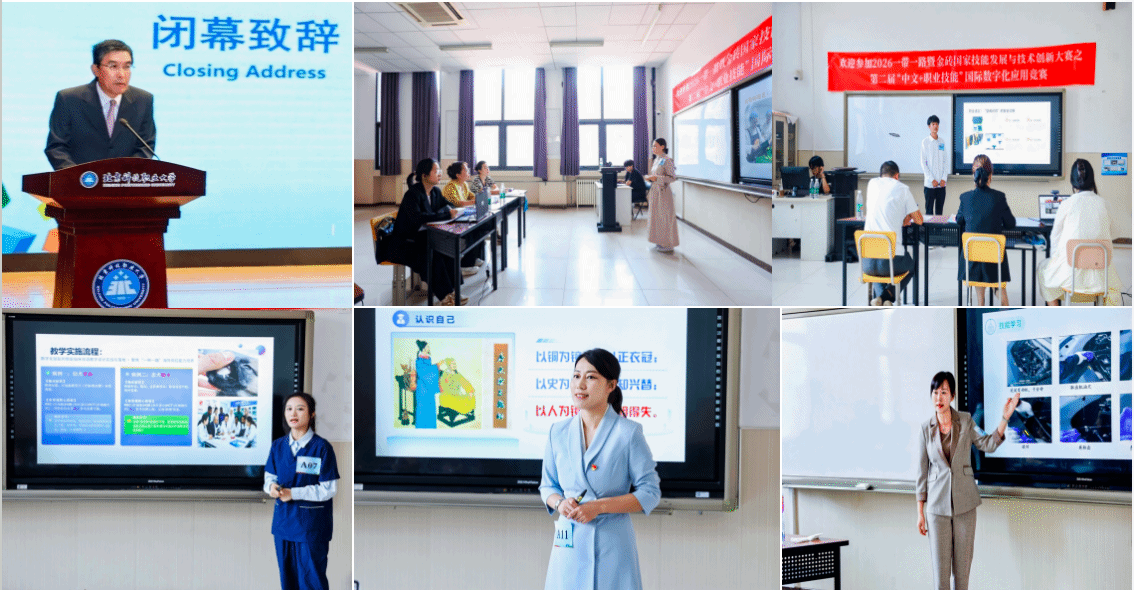
To guarantee smooth proceedings, the university carried out thorough planning and well‑organized arrangements. The School of Arts and Sciences, in coordination with multiple departments, oversaw end‑to‑end work including venue setup, competition administration and logistical support. Pre‑event training was delivered to clarify roles and responsibilities; on‑site technical specialists were available for equipment debugging. More than 20 student volunteers provided full‑range services including on‑site guidance, order maintenance and emergency response. Their thoughtful work won high praise from participating teachers and students, embodying the sense of responsibility and fine service ethos of faculty and students at Beijing Polytechnic University.
The successful holding of the regional trials marks a significant practical effort by the university to support the Belt and Road Initiative and BRICS‑oriented skills development. It also represents a pragmatic step for the university to deepen internationalized schooling and promote Chinese vocational‑education standards globally. Taking this competition as an opportunity, the university will further leverage its exemplary role as a vocational undergraduate institution, deepen integration between industry and education as well as international exchanges and cooperation, continuously enhance talent‑training quality and public‑service capacity, and make greater contributions to China’s national opening‑up strategy and the economic and social development of Beijing.



 Location:
 Dynamics